Most couples end up managing two completely disconnected wedding photo experiences without ever quite deciding to. There’s the casual collection — texts, social posts, and scattered guest photos gathered in the days after the wedding — and then, weeks later, an entirely separate professional gallery arrives from the photographer, typically via a private link to a different platform altogether, disconnected from everything guests have already been sharing and enjoying.
This split isn’t a deliberate choice most couples make. It’s simply the default outcome of using tools that were never designed to talk to each other. Wedbox’s photographer gallery integration exists specifically to remove that split — bringing professional and guest-captured photos into a single, unified space. Here’s why that consolidation matters more than it might initially seem.
The Hidden Cost of Two Separate Photo Experiences
Guests lose access to the professional photos entirely — or get them far too late. When a photographer delivers a gallery through their own separate platform, that link often goes only to the couple, who may or may not think to forward it widely. Guests who contributed candid moments to a casual shared album may never see the polished, professional shots from the same day, and vice versa.
The couple has to manage two timelines instead of one. Guest photos tend to appear quickly — often within hours. Professional galleries typically take weeks to arrive, after editing. Without a shared space that both can eventually live in together, couples end up checking two completely different places at two completely different times, rather than watching one wedding album gradually become complete.
Context and continuity get lost between the two collections. A candid, guest-captured shot from the reception and a posed, professional photograph from the same moment tell a much richer combined story than either does alone — but only if they’re viewable side by side, in the same place, rather than siloed in separate galleries that most people never think to cross-reference.
Photographers themselves often lack an easy way to contribute to a “living” wedding album. Many professional delivery platforms are built purely for one-way client delivery, not for feeding into a broader, guest-inclusive shared space. This means even photographers who’d be happy to make their work part of a fuller collective album often have no simple mechanism to actually do so.
What Direct Photographer Integration Actually Enables
One Simple Invitation Link, No Complicated Setup
Wedbox’s approach to this problem is deliberately lightweight: a couple sends their photographer a single invitation link, and the photographer can upload their finished gallery directly into the same shared album already being used by guests. No separate account creation, no complex technical onboarding — just a direct path from “photographer finishes editing” to “gallery lives in the same place as everything else.”
This simplicity matters because photographer workflows are already demanding, juggling dozens of clients and delivery deadlines simultaneously. A feature that requires significant extra effort from a photographer is a feature that quietly gets skipped. One that takes a single link and a normal upload action is one that actually gets used.
Professional and Candid Photos, Genuinely Side by Side
When a photographer’s gallery uploads into the same album as guest photos, something valuable happens that a separate delivery link can never replicate: the two perspectives sit together, viewable in the same browsing experience, rather than requiring a couple (or their guests) to consciously seek out and compare two entirely separate collections.
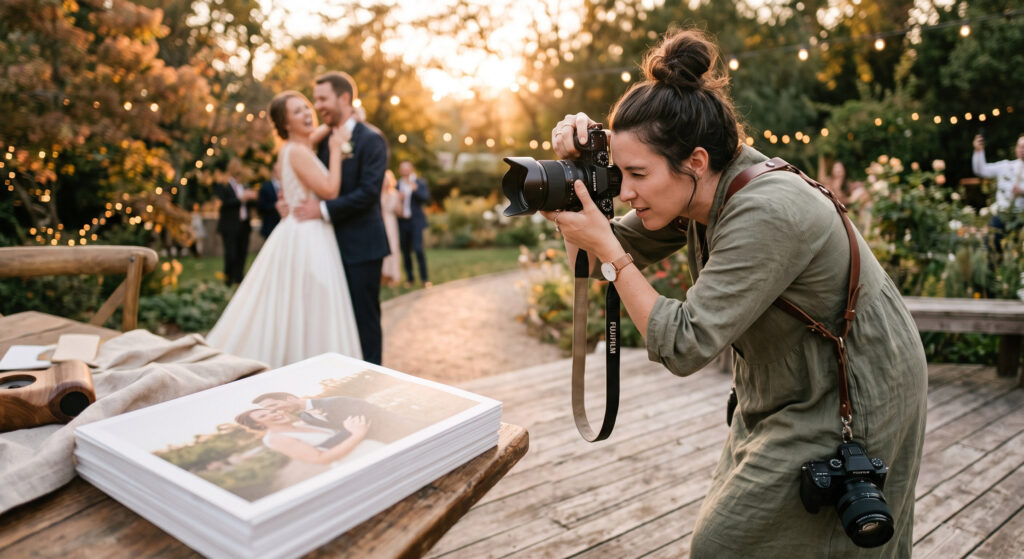
This matters because these two photo types genuinely complement each other. A professional photographer captures composed, technically excellent shots of key moments — the first kiss, the cake cutting, formal family portraits. Guests capture something different: unguarded laughter mid-conversation, a grandparent dancing, the quiet moment between the couple that no one but a nearby friend happened to notice. Neither collection alone tells the complete story of the day. Together, in one place, they genuinely do.
Full Resolution, Preserved
A common frustration with casual photo-sharing methods is quality loss — images compressed through repeated forwarding, screenshotting, or platform-specific compression. Because photographer uploads go directly into Wedbox at their original resolution, professional images retain their full quality throughout, exactly as delivered by the photographer, rather than degrading through informal sharing channels.
This matters particularly for images couples intend to print, frame, or use for anniversary albums later — the difference between a crisp, full-resolution photograph and a repeatedly-compressed version is often significant, even if it’s not obvious at a glance on a phone screen.
A Genuinely Complete Album, Not Two Fragments
Perhaps the most significant benefit is simply psychological: a wedding album that lives in one place, growing steadily more complete as different sources contribute to it, feels fundamentally different from two disconnected collections that a couple has to consciously manage and cross-reference. One creates a natural sense of “our wedding album is coming together.” Two separate systems create ongoing, low-grade administrative overhead — remembering where each type of photo lives, whether guests have seen the professional shots yet, whether the photographer’s gallery has been shared widely enough.
Real-World Application: How This Plays Out in Practice
Consider a couple who, ahead of their wedding, sets up their shared Wedbox album and sends their photographer a simple invitation link as part of their pre-wedding checklist — a five-minute task completed weeks before the event itself.
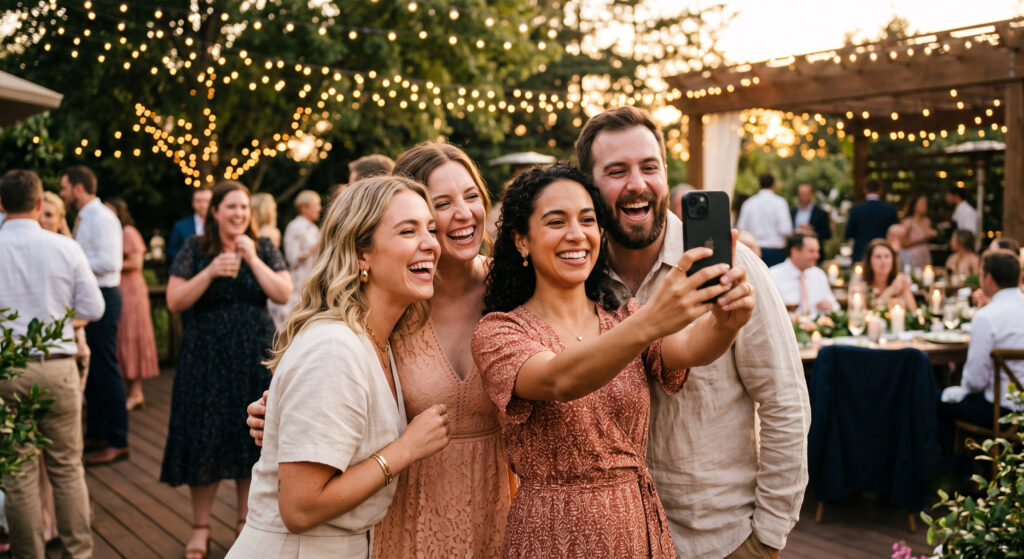
Throughout the wedding day, guests upload candid photos directly into the album via QR code, capturing the kind of spontaneous, unplanned moments that populate any lively celebration. Two and a half weeks later, once the photographer has finished culling and editing their shots, they log in via the same invitation link and upload their full professional gallery — roughly 400 finished images — directly into the identical album guests have already been contributing to and browsing.
Rather than the couple needing to separately share a new, different link with everyone weeks after the fact, guests who already have access simply see the album update, with polished professional shots now appearing alongside the casual photos they’ve already been enjoying. A friend who took a great candid photo during the ceremony can now see that same moment captured a second time from the photographer’s more formal vantage point — two versions of the same instant, viewable together rather than scattered across separate platforms.
When the couple eventually wants to preserve everything permanently, they download the complete collection — professional and guest-contributed images together — in a single action, rather than needing to separately retrieve and merge two entirely different sources days or weeks apart.
The Takeaway
A wedding photo collection is genuinely richer when it includes both the professional and the candid, the composed and the spontaneous — but only if both are actually accessible in the same place, to the same people, without requiring separate logins, separate links, or separate reminders. Bringing photographer uploads directly into the same shared album guests are already using turns two disconnected photo experiences into one complete, continuously growing wedding album — exactly the kind of album most couples assumed they’d naturally end up with, before discovering how often that doesn’t happen without the right tools in place.